Attachment styles
What each of you does when closeness starts to feel unsafe. Why one of you moves toward and the other moves away, and how that dance became automatic.
HPCSA Registered Counsellor · Online across South Africa
You're not here because you've run out of love. You're here because something between you isn't reaching the other person anymore — and you'd like it to.
Online counselling for couples and married partners, anywhere in South Africa, in Afrikaans or English. I work with the relationship itself, not with deciding who's right.
Your first session is free. Both of you attend. No commitment to a second.

If any of this sounds like you both, you're in the right place.
None of these mean the relationship is failing. They usually mean something needed saying that never quite got said.
How I work
I'm not here to decide who's right.
I'm not on your side and I'm not on your partner's side. I'm on the side of the relationship, which is its own third thing in the room, with its own needs.
Most couples arrive braced for a verdict — expecting me to hear both sides and quietly rule on who's being unreasonable. That's not how this works. When something isn't serving the relationship — a behaviour, a pattern, a way of speaking to each other — I'll name it, from either of you, evenly.
What I'm listening for is whether the accommodation between you is going both ways. Relationships ask both people to bend. They shouldn't ask either person to become someone else.

Most arguments aren't two people disagreeing about reality. They're two people describing the same thing from two positions neither can see past.
The work
Every couple is different, and the shape of the work follows what you bring. These are the areas we most often move through.
What each of you does when closeness starts to feel unsafe. Why one of you moves toward and the other moves away, and how that dance became automatic.
How each of you fights — and why your two styles collide the way they do. Not to assign fault, but so the pattern stops being invisible.
Practical, learnable ways to say the difficult thing so that it lands. Including the habit of asking directly for what you need, rather than expecting your partner to intuit it.
The skill almost no one is taught, and the one that matters most. Every relationship ruptures. What separates couples who last is what happens in the hours afterwards.
How each of you was shaped long before you met, and how that shows up between you now. What happened to you explains the pattern. Understanding it is what gives you a choice about it.
Where you genuinely differ, what's negotiable, and what isn't. Naming the non-negotiables out loud so they stop being assumed.
Emotional and physical closeness, and the distance that grows when neither gets spoken about.
Trust ruptures don't respond to ordinary compromise work. They need their own process — atonement, attunement, and then rebuilding, in that order. Skipping ahead is why so many attempts at repair fail.
Finances, in-laws, division of labour, parenting differences. The arguments that look like admin and are almost never really about admin.
New baby, relocation, career change, illness, a business, an empty house. Transitions don't damage relationships — they expose whatever wasn't yet resolved.
Where you're each going, whether it's the same direction, and what you're building together.
Which one is you
The work overlaps heavily, but the terrain is genuinely different — and I approach them differently.
| Couples Counselling | Marriage Counselling | |
|---|---|---|
| Who it's for | Long-term and short-term partners who aren't married | Couples who are legally married |
| What's different | Less has been assumed yet, so there's more room to ask the foundational questions | Legal, financial, familial and often religious layers change what's at stake in every conversation |
| Common starting point | Standing in front of a significant decision together — moving in, moving cities, children, marriage itself — while something between you isn't working | Years of accumulated patterns, and decisions that now carry real cost whichever way they go |
| The advantage | That openness is genuinely useful, and we use it | Depth of shared history to build on, once the patterns are named |
Planning a wedding rather than repairing a marriage? Premarital counselling is a separate offering, and the heart of this practice.
The honest part
Worth saying plainly before you book.
Both of you carry equal responsibility for the health of the relationship.
Each of you is responsible for your own work. An attachment style, a difficult history, a diagnosed condition all explain a great deal, and they're taken seriously here — but they can't be the reason nothing ever changes.
Your responsibility to each other is different: to understand what's going on for your partner, and to make healing possible. Never to indefinitely manage it for them.
Also worth knowing: patterns built over a lifetime don't break in a month. Research on habit formation published in the European Journal of Social Psychology found new behaviours took a median of 66 days to become automatic, with individuals ranging from 18 to 254 days — the popular "21 days" figure has no basis in the evidence. If you're both giving each other grace on that timeline, you're doing it right.
What underpins this
The clinical foundation underneath this work is drawn from established, evidence-based approaches.
The underlying model of what makes relationships work comes from Dr John Gottman's longitudinal research at the University of Washington, which tracked couples over decades and identified the specific interaction patterns that predict stability or separation. The repair sequence used after a trust rupture — atone, attune, then rebuild attachment — comes directly from that body of work.
For the thought patterns that run underneath the arguments. What you tell yourself about your partner's behaviour usually matters more than the behaviour did.
Structured dialogue that slows a conversation down enough for both people to actually be heard, and connects present-day conflict to the histories underneath it.
No sorting either of you into a type. You are the expert on your own life; my job is to hold a space where you can both be honest without being judged for it.
For what genuinely cannot be changed. Building a relationship around your actual values, rather than around the version of each other you'd hoped for.
As a Registered Counsellor, I do not diagnose or treat mental health disorders. Where a diagnosed condition is part of the picture, I work alongside your treating professionals.
What to expect
Sessions run for 60 minutes, online, wherever you both are.
Both of you attend, online, from wherever you are. We talk about what brought you here and what each of you wants to be different. No payment, no obligation to book a second.
Early sessions go into your history as a couple and as individuals — how you met, what each of you brings, where the patterns started. This part can feel slow. It's what makes everything afterwards work.
60-minute sessions. Real conversation, both of you heard, patterns named as they happen in the room.
Every session ends with something practical — a tool, a task, a way of having the conversation differently. The change happens between sessions as much as in them.

I'm based in Mbombela, Mpumalanga, and work online across South Africa — and with South Africans living abroad who want a counsellor who understands the context they came from.
You can both be in the same room, or dial in separately if you're in different cities that week. Either works — what matters is that you're both there.
If you're searching for marriage or premarital counselling in Nelspruit, Mbombela or anywhere else in Mpumalanga, sessions are entirely online — so there's no office to drive to and no waiting room. Just you, your partner, and a video call at a time that works for both of you.
Free downloads
Tools you can start using this week.
A collection of free guides and worksheets for couples — conflict, communication, repair after an argument, and understanding each other's attachment patterns. Yours to download, no session required.
Browse the Free Couples ResourcesEk doen sessies in Afrikaans of Engels — net soos julle die gemaklikste voel.
Huweliksberading, paarberading en voorhuwelikse berading, alles aanlyn, oral in Suid-Afrika. Julle eerste sessie is gratis.
Questions
Rates vary widely between practitioners and provinces. Online couples sessions here are R700, and your first session is free with no obligation to book a second. Sessions run for 60 minutes. If your income doesn't stretch to the full rate, message me on WhatsApp to ask about sliding scale pricing — every situation is considered individually.
From couples I've worked with
"As my fiancé and I prepare for our wedding in June, it has always been important for us to be as prepared as we can for the marriage. Our first session with Sumarie was wonderful and she actively listened throughout our session. As much as it was a session to get to know one another, there was so much that came out of the hour. My partner and I look forward to an exciting journey ahead, with the support and guidance from Sumarie."
"From the first session my Partner and I had Sumi welcomed us. Sumi always engaged, managed the session well and provided very valuable insight as to where we had challenges etc. She took the time to explain when we had questions and often provided more info. My Partner and I look forward to our sessions with Sumi!!"
"Sumarie is a fantastic counsellor who is very patient and friendly. She explains everything clearly and brings good insight into problems. I would definitely recommend her to anyone who wants couples counselling. Every session is helpful and you get a new perspective on the situation."
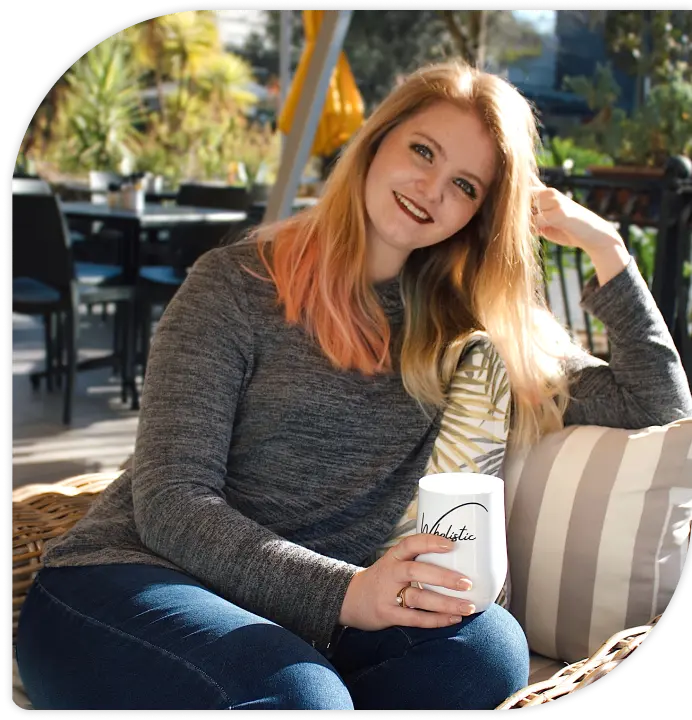
About the counsellor
I'm an HPCSA Registered Counsellor in private practice in Mbombela, Mpumalanga, working with couples, married partners and premarital couples across South Africa, in Afrikaans and English. I also run the Wholistic Premarital Couples Retreat.
Page last reviewed: September 2026
An important note. Everything on this page describes healthy compromise between two safe partners. It is not a framework for tolerating abuse, and patience is never the answer to a safety concern.
If you're in a relationship where you feel unsafe, couples counselling is not the right first step. Please reach out to one of these services — all free, all confidential:
If you'd like individual support while you work out what to do next, you're welcome to contact me directly .
Get started
Both of you, sixty minutes, online, no cost and no commitment. Pick a time below.
Trouble with the calendar? Open the full booking page.