Free stress guide
How to Actually Manage Stress (Acute and Chronic Are Different Problems)
Most stress advice fails because it treats stress as one thing. The techniques that genuinely help when your heart is pounding right now are not the ones that help when you have been under pressure for eleven months — and using the wrong one is why so much of this seems not to work.
PDF · 14 pagesFree · no cost, everSumarie Engelbrecht
Sound familiar?
This is for you if
I have tried the breathing exercises and they do not touch it
I am fine in the moment and permanently wound up underneath
My body is clearly stressed even when I do not feel stressed
I want to know what actually works rather than another list of tips
I need something for right now and something for the long run
Two different problems wearing the same word
Acute stress is a short, sharp mobilisation: something happens, your sympathetic nervous system fires, and you get a burst of activation designed to be spent and then switched off. It is not harmful. It is the system working as intended, and the goal is simply to come down afterwards.
Chronic stress is a switch that never fully returns. The activation is lower-grade and continuous, cortisol stays elevated, and the effects accumulate — on sleep, digestion, immune function, memory, mood. Crucially, there is no in-the-moment technique that resolves it, because there is no moment. It is the baseline.
This is why so many people conclude stress management does not work for them. They have been applying acute tools to a chronic problem, which is like using a fire extinguisher on a house that is simply too cold.
What genuinely works in the moment
For acute activation, the interventions with the best evidence are the ones that work on the body directly. Extended exhalation — making the out-breath meaningfully longer than the in-breath — reliably shifts autonomic balance, and does so within a couple of minutes. Cold exposure to the face triggers a measurable slowing response. Physical exertion completes the stress cycle the activation was preparing you for.
What tends not to work in acute stress: reasoning with yourself, analysing the situation, or anything requiring the parts of your brain that are least available at that moment. Those are useful later. Reaching for them first is why people conclude they are bad at calming down.
Chronic stress needs the conditions to change
The uncomfortable finding is that chronic stress rarely responds to technique alone. Meditation, exercise and sleep hygiene all genuinely help, and none of them will offset a workload, a relationship or a financial situation that is generating the load faster than any practice can discharge it.
So the chronic section is largely about the harder questions: what is actually producing this, what is genuinely within your control, what boundary has never been set, and what support has never been asked for. Less satisfying than a breathing technique, and considerably more effective.
Common questions
Questions people ask
Extended exhalation is the most reliable — breathe in normally and make the out-breath roughly twice as long, for two to three minutes. It works on the autonomic nervous system directly, which is why it does not require you to feel calm first.
More free guides
Others that go with this one
Every download on the site opens with the same single email address — give it once and none of these will ask again.
Free burnout self-assessment
Am I Burnt Out, or Just Tired?
A free self-assessment for telling ordinary exhaustion apart from real burnout — and identifying which of the three burnout patterns you are in.
Read moreFree burnout worksheet · Type 01
Frenetic Burnout: When You Respond to Exhaustion by Working Harder
For when you have not stopped pushing, you have pushed harder. A free worksheet for recognising overload burnout — and actually recovering from it.
Read moreFree boundaries worksheet
How to Set Boundaries Without the Guilt
What a boundary actually is, how it differs from an expectation or an attempt at control, and how to set one that works — free research-grounded worksheet.
Read moreKeep reading
Articles on the same ground
 Anxiety & Burnout
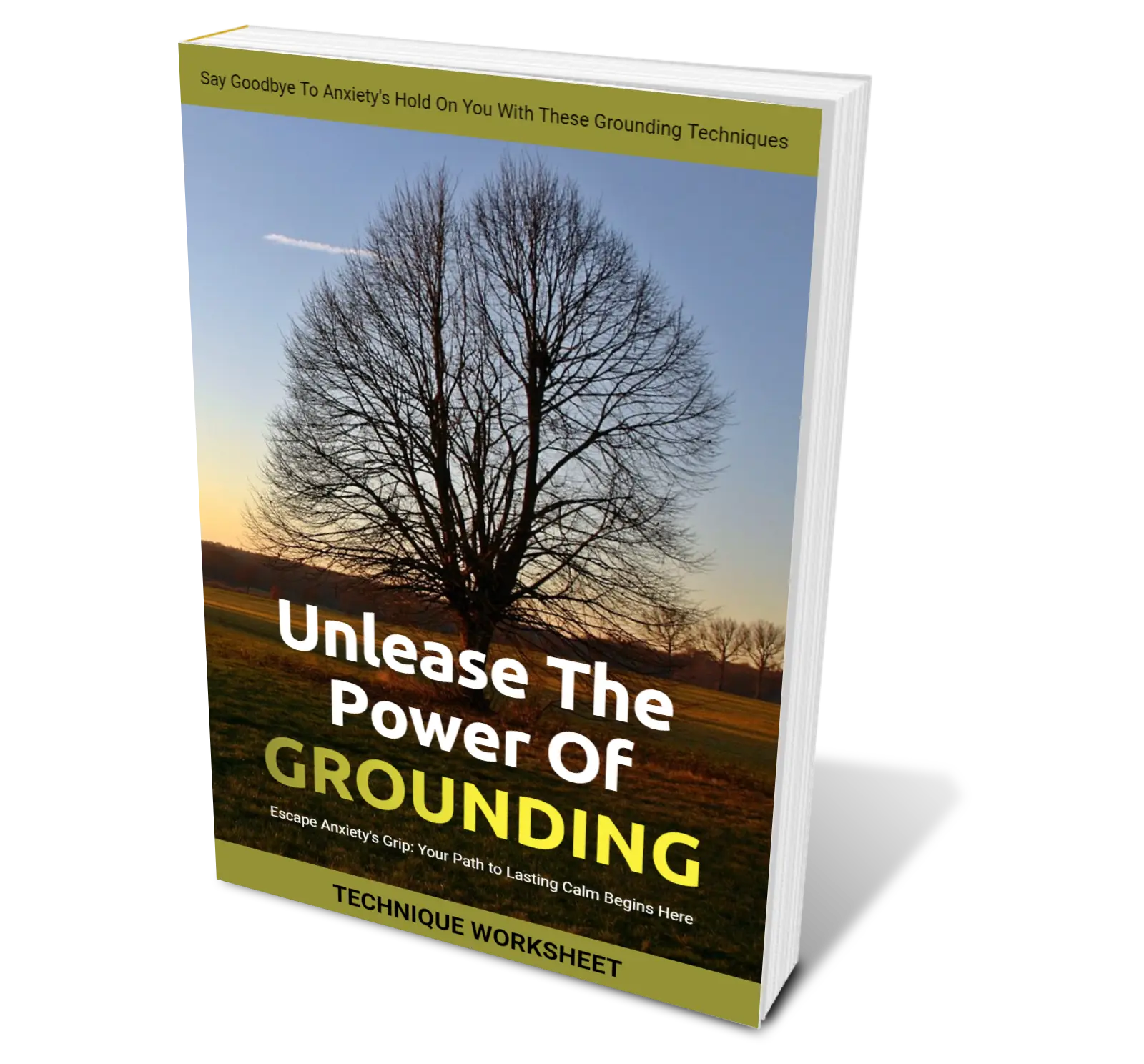
Unraveling the Knot: What Is Anxiety and How Does It Manifest?
In the labyrinth of human emotions, anxiety stands as a formidable and often misunderstood adversary. It's a feeling we've all encountered at some point in our lives, a seemingly…
Read article Anxiety & Burnout
10 Signs of Emotional Exhaustion (And What You Can Do Right Now to Feel Better)
Feeling emotionally drained but not sure why? Discover the signs of emotional exhaustion, what causes it, and simple ways to restore your energy.
Read article Anxiety & Burnout
Leisure Sickness: Navigating Unwinding Woes
Have you ever taken a few days off work with big plans to relax to the max but then a day or two in, you start feeling under the weather? Well, you're not alone!
Read articleWhen the load itself is the thing that needs to change
Chronic stress usually needs something structural to shift, and those are hard decisions to make alone. Counselling is online across South Africa — the first session is free.
This guide is for information and is not a substitute for individual counselling. Written by Sumarie Engelbrecht, HPCSA Registered Counsellor (PRC 0042480).